How Laser Micro-Perforated Wood Turns Furniture Into Acoustic Surfaces
If you’re familiar with sound-absorbing furniture, then you know just how well it does in reducing echoes and minimizing reverberations. That said, do you know what goes into creating these high-quality, performative pieces? The secret is the actual material: laser micro-perforated wood.
The Science Behind Laser Micro-Perforation
Laser micro-perforation is a manufacturing technique that uses a laser beam to create tiny holes within a surface material. It’s a non-contact process, meaning it’s done using lasers and other technologies rather than physical contact. The laser is so exact that it creates these small holes without damaging the surrounding material.
The size of the hole as well as the distance between each hole will vary. The smaller the hole, the more precise the machine needs to be; the larger the hole, the less precise the machine needs to be. Larger holes allow for more process variation for the manufacturer.
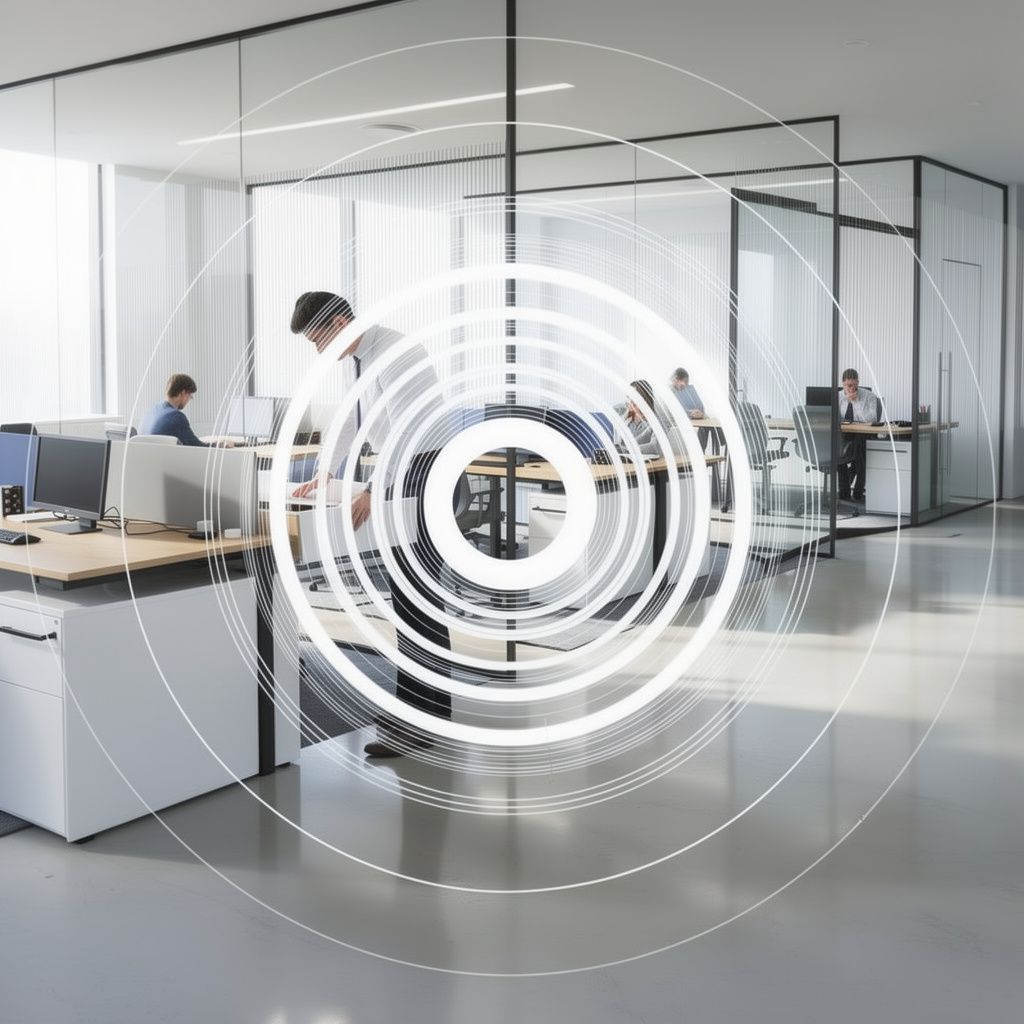
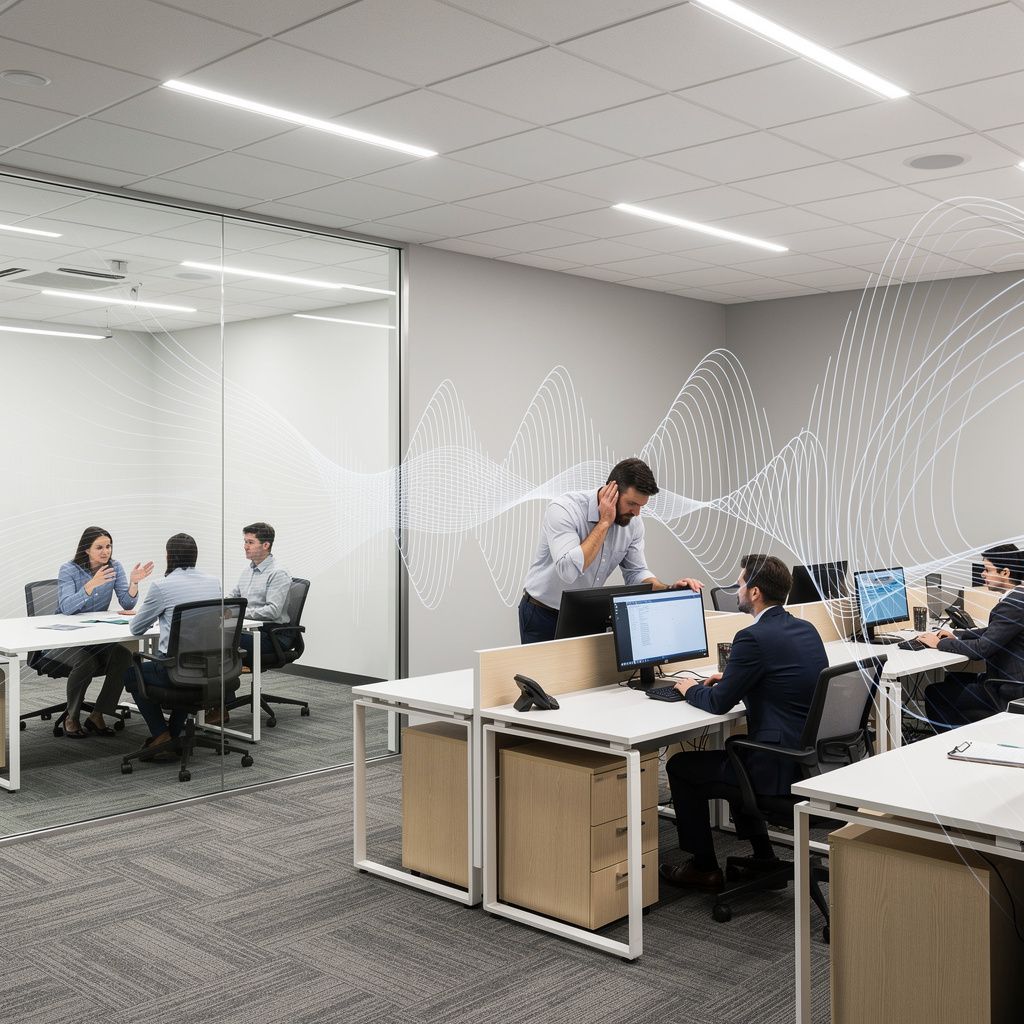
The micro-perforation technique for any sound-absorbing product is specific. A hole too big or spaced too far from another hole won’t perform as optimally from an acoustics point of view. The diameter of the micro-perforation is key: too small and the sound energy sees too much resistance and reflects away; too large and the sound flows through with minimal friction and without absorbing the sound. The right amount of friction is key to optimizing for sound absorption. When sound waves hit the furniture, optimized micro-perforated holes absorb the sound energy, lowering the reverberation of a space.
Size Matters
The size of the laser micro-perforations correlates with how an acoustic material, or in this case, furniture, absorbs sound. Micro-perforations in the acoustic industry typically range from about 0.2 mm to 0.7 mm in diameter, depending on the use case. The smaller hole diameters in that range are used for very thin materials like films; the larger hole diameters are sometimes used for thicker materials; however, they tend to be less efficient and increasingly visible.
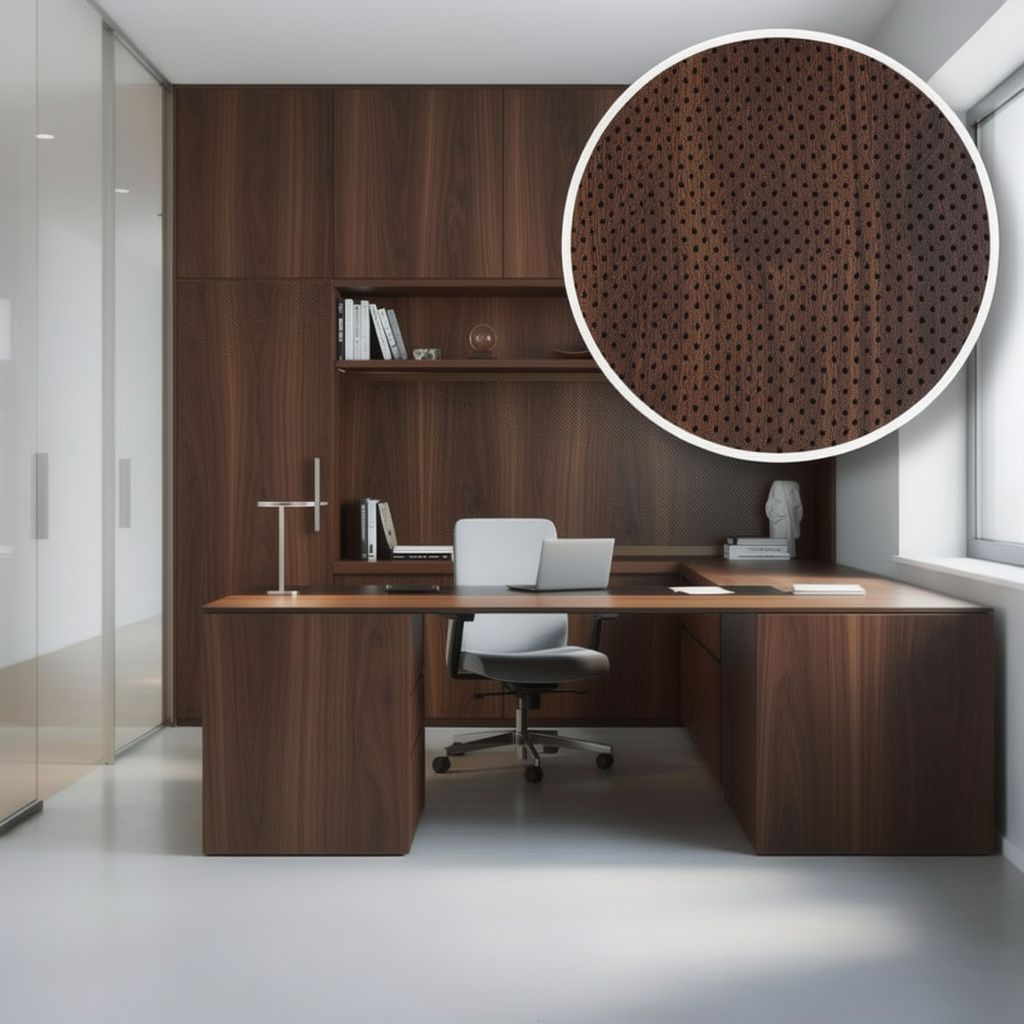
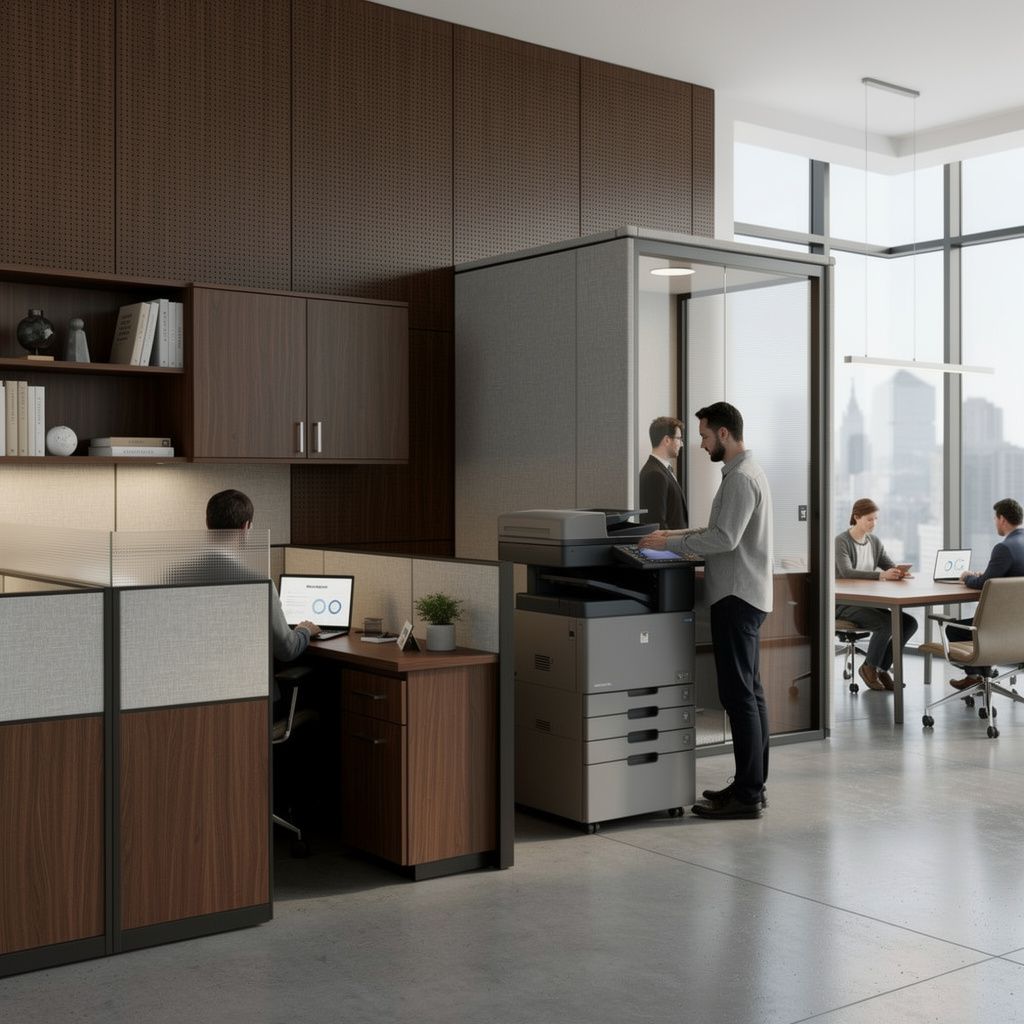
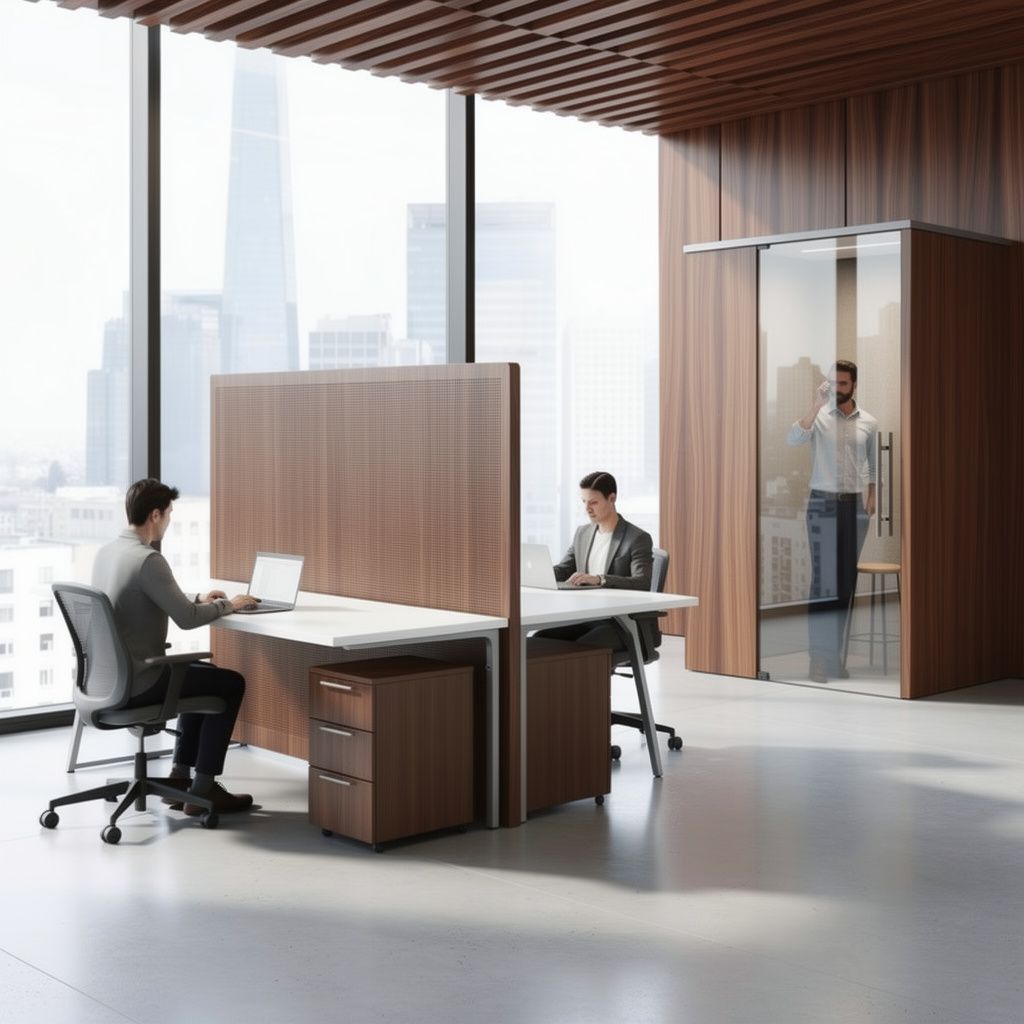
SoniQ™ Technology uses laser-perforated surfaces with 0.4mm holes. These incredibly tiny holes are optimized for wood surfaces and absorb sound cleanly, while maintaining a solid, flat, clean look. This allows the wood to absorb sound while preserving its natural finish, structural integrity, and visual appeal. As a result, desks and cabinets can serve as high-efficiency acoustic solutions, without compromising the office’s aesthetics.
Turning Wood Panels into Acoustic Furniture Solutions
Micro-perforations will convert a highly reflective material, such as veneered wood, into a more porous and absorbent surface. Non-perforated wood is dense and will deflect sound waves that enter the room. This can lead to echoing and higher reverberation times.
When the wood is perforated with a precision laser, it can now convert approaching sound waves into negligible heat through friction. The perforated holes will absorb a high percentage of the incoming sound energy across the office space as people and things make noise.
This type of treatment can turn solid wood from a low Noise Reduction Coefficient (NRC) of 0.05 to 0.15 into a higher NRC rating between 0.75 and 0.85. For an open-plan office, this means better speech clarity, fewer distractions, and more productive, focused time.
Not all Sound-Absorbing Furniture is Created Equal
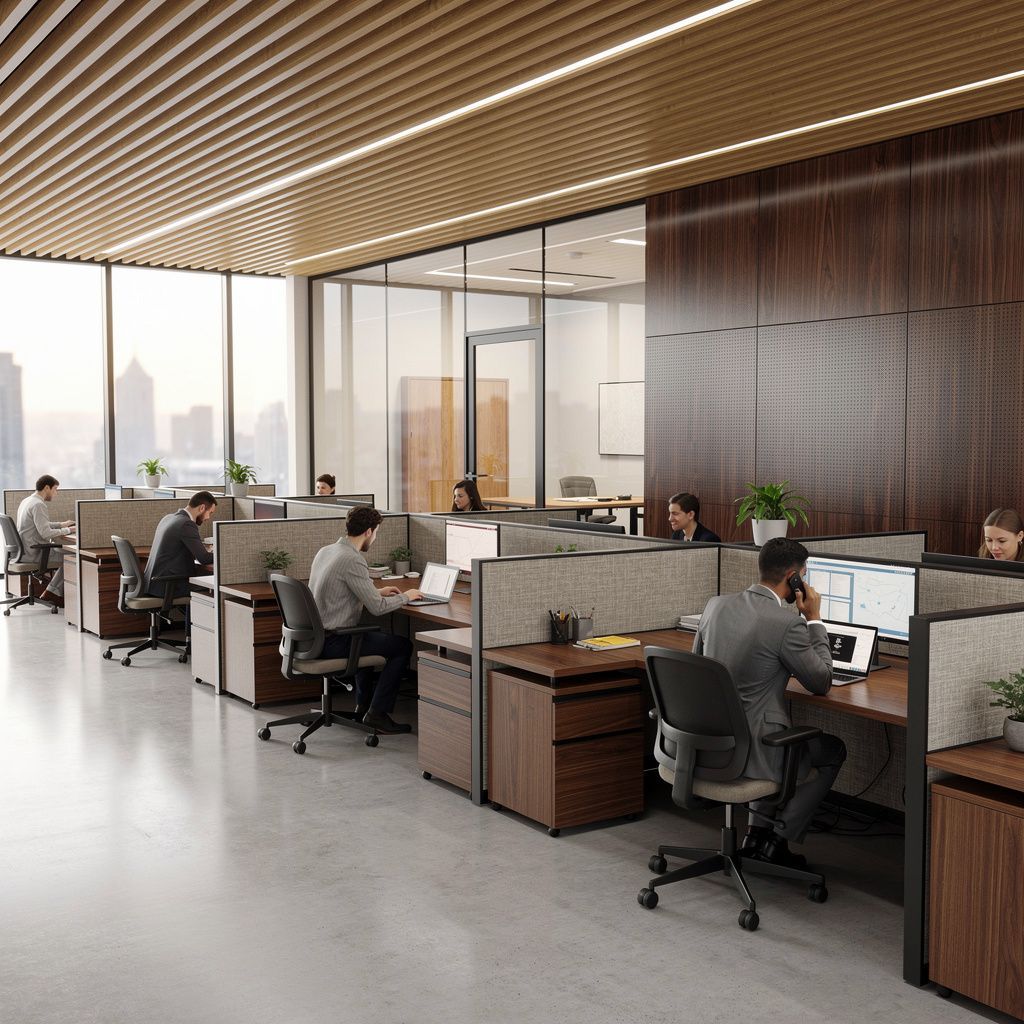
With more employees returning to office environments for full-time or hybrid schedules, more manufacturers are being tasked with creating sound-absorbing furniture. However, manufacturing accuracy is extremely important and will directly influence performance across speech frequencies.
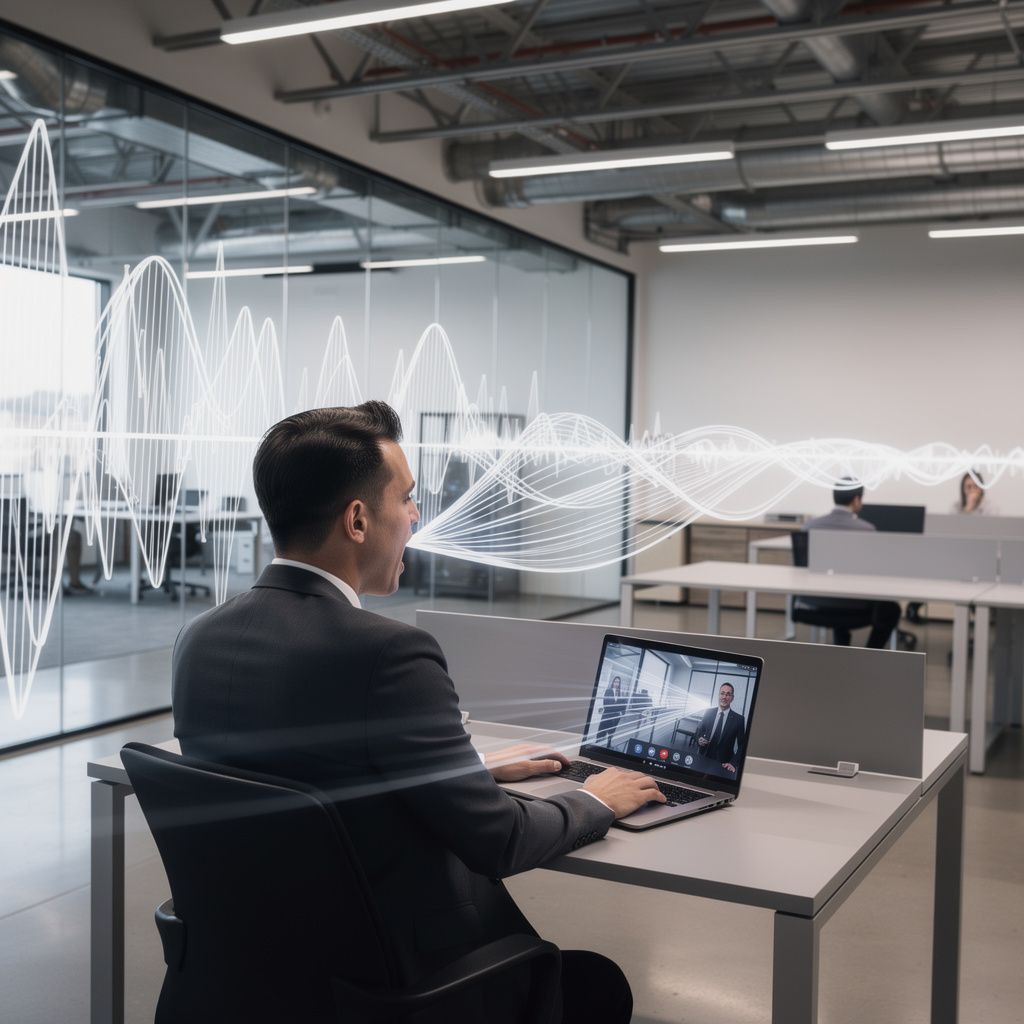
Within an office, speech frequencies range from mid-to-high. Middle frequencies (around 250 Hz to 2,000 Hz, created by vowel sounds) are longer, higher-energy sound waves that require specific material thickness and perforations. This can be anything from a normal conversation between two co-workers at the end of the hallway to a dog barking outside the building to general office chatter.
High frequencies (around 2,000 to 4,000 Hz) create shorter wavelengths; these are the frequencies of nuance, created by the consonant sounds during speech. These are less of a concern because they are lower energy and tend to be highly directional.
Additionally, because offices tend to have more electronics, such as computers, printers, and servers, these devices add a steady layer of low-frequency background noise in the workspace.
Furniture isn’t truly “sound absorbing” if it can’t address the middle frequencies described above. While you may think that you’ll need to add a few more wall panels or ceiling baffles, the real problem could actually be the selected furniture.
Partnering with acoustical professionals using SoniQ™ Technology by
RPG Acoustical Systems will ensure that your office is outfitted with best-in-class acoustic solutions. From furniture to wall panels to ceiling tiles, your office will be transformed from a loud, distracting environment into a calmer, more conducive-to-work space.
FAQ
What’s the science behind laser micro-perforation?
Laser micro-perforation is a manufacturing technique that creates tiny holes within a surface material. For sound-absorbing purposes, micro-perforation transforms a solid, dense material such as veneered wood into a sound-absorbing material. The holes react with the sound waves through air friction, greatly reducing what can continue to travel throughout the space.
Why use 0.4mm laser perforations in sound-absorbing office furniture?
A microscopic 0.4mm hole made from laser perforations is ideal for sound-absorbing office furniture for two reasons. First, sound energy that reacts with the holes is converted to heat through friction; it simply goes away. A high-tech laser makes it relatively easy to pack nearly 200,000 of these sized holes within a square meter. Second, 0.4mm holes are very difficult to see with the naked eye, keeping the aesthetic of the office furniture looking polished and professional.
How does SoniQ Technology improve office sound quality?
Furniture made with SoniQ technology improves an office’s sound quality by turning standard desks and cabinets into 3-dimensional sound absorbers. A once-loud, chaotic office can be transformed into a calmer, more productive work environment by strategically incorporating sound-absorbing furniture from SoniQ.