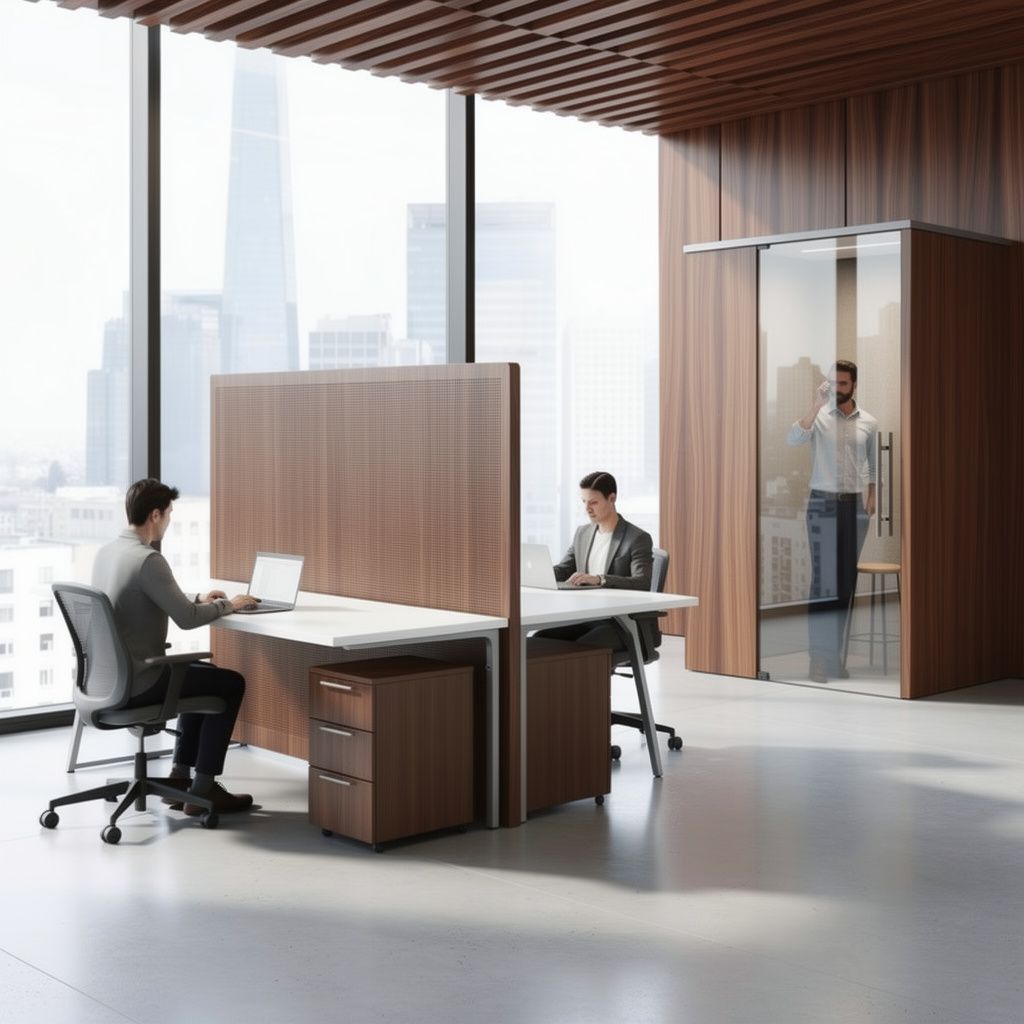
The Science Behind Sound-Absorbing Wood Furniture

September 3, 2026

Share this article

When you see the word “sound-absorbing wood furniture,” you may think it’s an oxymoron. After all, how can a hard piece of wood actually absorb sound? Don’t all hard, flat surfaces act as reflectors? Well, the secret is in how acoustic office furniture is constructed, and the science behind it may just surprise you. 

A Lesson in Acoustic Physics

Whether high school physics was a favorite subject of yours or not, it’s worth diving into the material to learn how sound-absorbing wood furniture actually works. Solid wood is dense and hard. When sound waves hit a surface, they bounce back. This causes echoes and supports longer reverberation times in spaces. 


When wood is treated for acoustic purposes, the solid wood becomes porous. This is done through laser micro-perforations, forming tiny holes that are practically invisible to the naked eye. These tens of thousands of tiny holes trap sound energy when a wave hits them, absorbing the sound and converting it into heat even though the wood is still smooth and flat. So rather than a sound wave bouncing off it, the sound wave is greatly reduced and, in some cases, eliminated entirely.

Reverberation and Absorption: An Inverse Relationship

Now that the physics 101 lesson is behind you, it’s time to grasp the concepts of reverberation and its inverse relationship with absorption. Reverberation is best known as the lingering trail of sound. When a mallet is hit on a drum, you hear a lingering sound; it’s not a one-and-done. A high reverberation time means the sound takes a long time to fade inside a space after the source ends. 


High reverberation times can be problematic — and distracting — within office environments. Hearing chatter from the shared kitchen area linger can be bothersome to employees trying to finish certain projects. Even listening to a CEO
presenting in a boardroom can be frustrating when their voice echoes, and the words aren’t clear. That said, reverberation can build up in enclosed workspaces when sound waves repeatedly bounce off hard, reflective surfaces. And offices are notorious for having various hard surfaces — desks, chairs, bookshelves, cabinets, copiers, and printing machines are all reflective materials. 


The solution is often a holistic acoustic approach, meaning there’s a distribution of absorption across the space. Yes, adding
softer flooring and ceiling baffles can be beneficial, but sound doesn’t just travel up and down. Sound travels in all directions, so all hard, flat materials are prone to reflection. This is why distributed absorption can produce better sound quality when compared to flooring, ceiling, and wall treatments alone. 


Therefore, reverberation and absorption are inversely related. Reverberation will be high when absorption is low in an office, and vice versa. A pragmatic balance of reflective and absorptive surfaces within a workspace can ensure the best sound clarity. 

Calculations and Measurements to Consider

Every office space is unique. This is why certain acoustic calculations and measurements are necessary to determine the precise amount of sound-absorbing material and sound masking needed to control echo, reduce noise distractions, and create an environment that’s both enjoyable for employees and conducive to work. Below are a few calculations and measurements worth considering.

Frequency Performance

Acoustic frequency performance measures how effectively a surface or a space responds to different sound wave frequencies. These frequencies are measured in Hertz (Hz). Acoustic frequency performance in an office ranges from 250 Hz to 2,000 Hz for mid-to-high frequencies and 50 Hz to 250 Hz for low frequencies.


Calculating frequency performance is a multi-step process. It involves calculating the total volume of the space, determining the total absorption using Sabine’s Formula, and often running frequency responses using high-tech software.   

Reverberation Time 

Reverberation is just how long an echo lasts in a room. So reverberation time, or RT60, is the time it takes for a sound to decay by 60 decibels in an office after the sound stops. Again, the higher the reverberation time, the longer the sound lasts in the room. Too-low reverberation times can make a room sound “dead.” 


Reverberation time is primarily calculated using the Sabine formula. To find RT60, multiply 0.161 by the volume in cubic meters (m3) of the space. Then, divide this calculation by the total absorption in the room measured in metric Sabins (m2). 


The ideal reverberation time will vary depending on the office environment. In general, an optimal reverberation time is anywhere between 0.4 and 0.8 seconds. 

Work with the Experts to Solve Your Office Acoustic Problem

Unlike your school days, there’s no need to worry about calculating these challenging measurements on your own. Working with an acoustical consultant and getting solid guidance early in the process can ensure best-practice office acoustic design. Using time-tested and performance proven solutions from RPG Acoustical Systems is the next step. Their patented SoniQ technology improves an office’s sound quality by turning standard desks and cabinets into 3-dimensional sound absorbers. This technology will fine-tune your space so that speech intelligibility and acoustic comfort are right on target, giving your employees the space they need to be productive and focused. 

FAQ

  • How do sound waves interact with reflective versus absorptive wood surfaces?

    Sound waves bounce off hard, flat surfaces, including traditional office desks, chairs, bookshelves, and cabinets. But when a piece of furniture is sound-absorbing and made with absorptive wood, sound waves trap heat energy and dissipate it. Instead of a sound wave reflecting off the uniform material, the sound is greatly reduced or, in some cases, eliminated entirely. 

  • How does reverberation build inside enclosed workspaces?

    Reverberation can build up in enclosed spaces when sound waves bounce off hard, reflective surfaces such as glass, metal, concrete, or solid wood. Desks, chairs, cabinets, high ceilings, and solid floors can all affect reverberation time. 

  • How is reverberation time calculated?

    Reverberation time is calculated using the Sabine formula. To find RT60, multiply 0.161 by the volume in cubic meters (m3) of the space. Then, divide this calculation by the total absorption in the room, measured in metric Sabins (m2).

Recent Posts

September 3, 2026
Sonic clutter makes offices feel chaotic and hard to focus in. Learn what causes it and how acoustic furniture helps reduce noise buildup.

Soni logo in blue and gray text on a white background
September 3, 2026
Vertical surfaces like walls, desks, and cabinets drive office reverberation. Learn why they matter and how absorptive surfaces fix it.
SoniQ logo in dark blue and gray on a white background
September 3, 2026
Modern desk and workstation systems can hurt office acoustics. Learn how sound-absorbing materials fix reflective surfaces and cut reverberation.
August 24, 2026
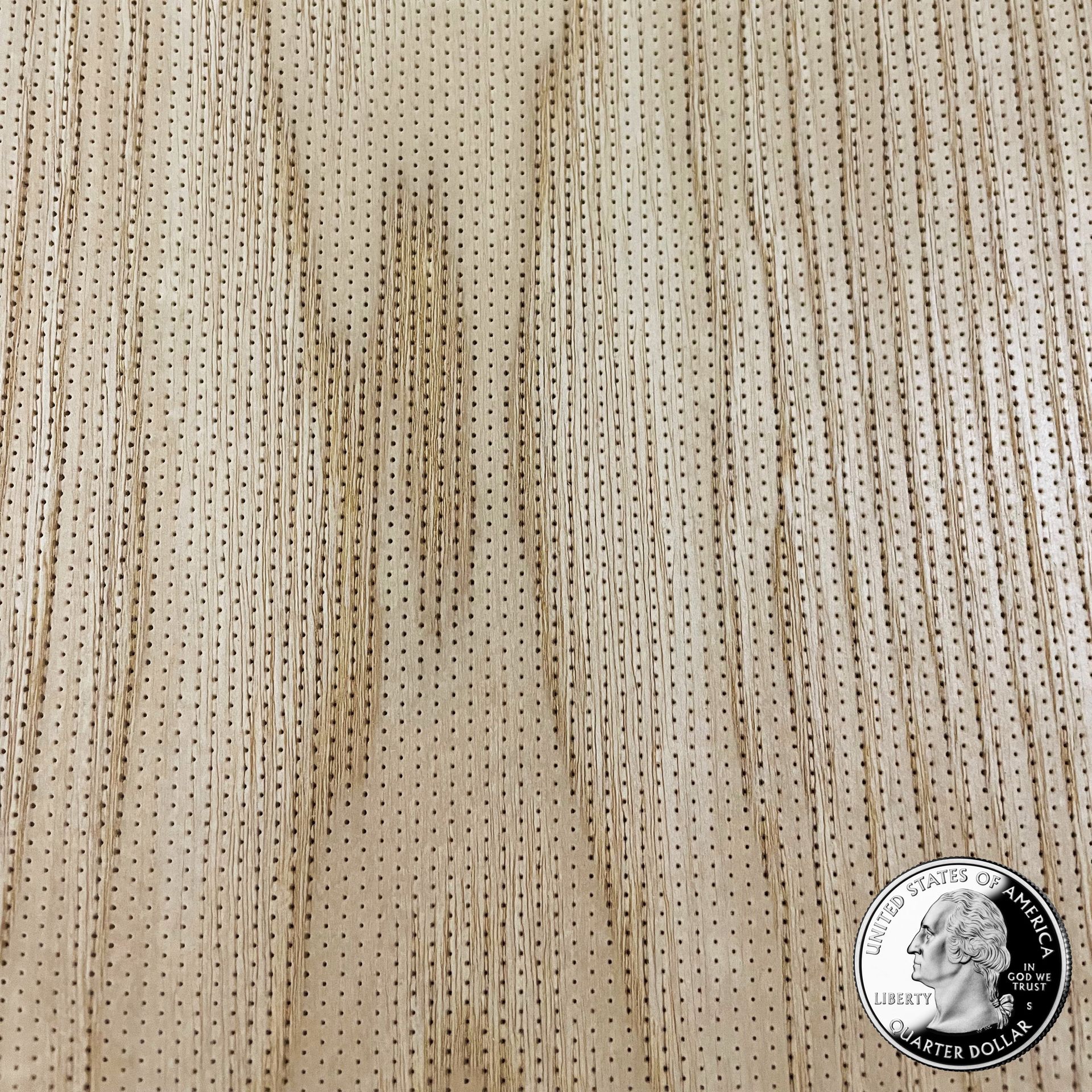
If you’re familiar with sound-absorbing furniture, then you know just how well it does in reducing echoes and minimizing reverberations. That said, do you know what goes into creating these high-quality, performative pieces? The secret is the actual material: laser micro-perforated wood.
August 24, 2026
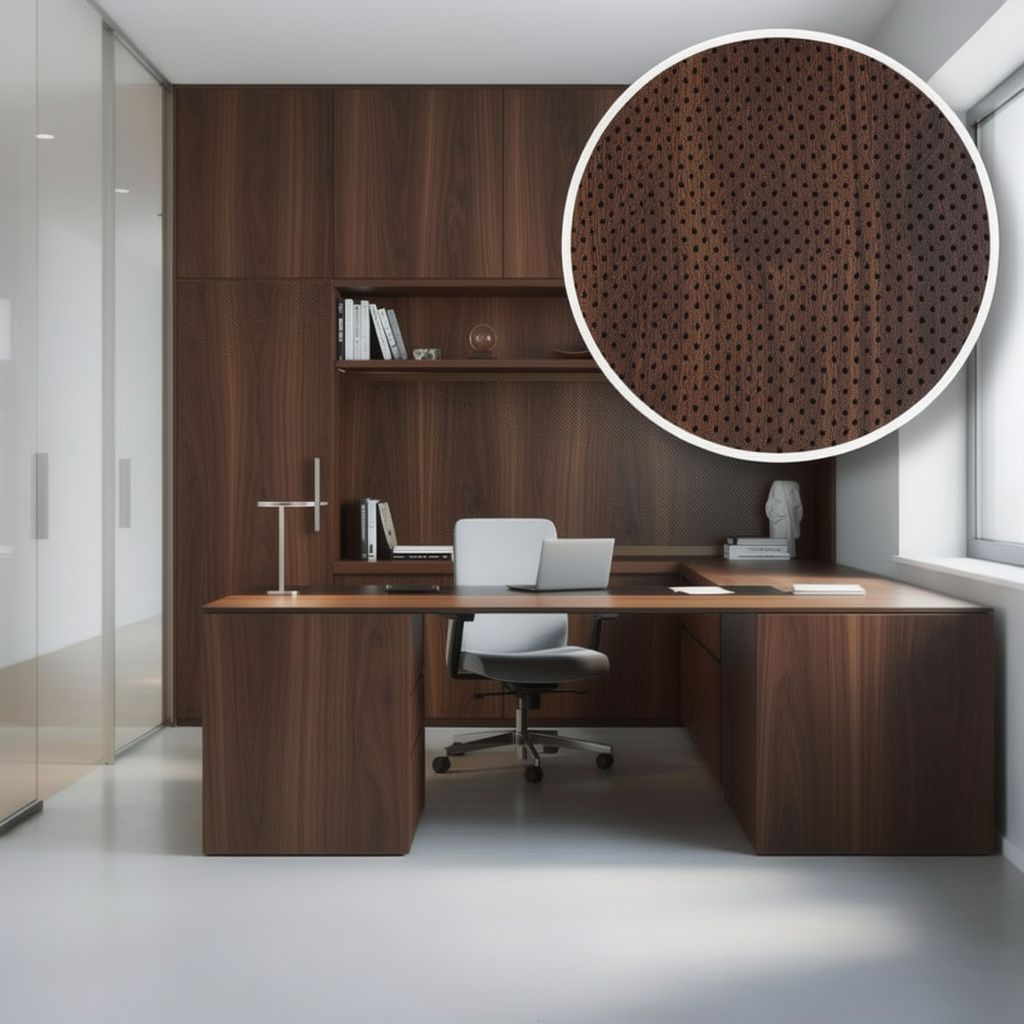
Sound absorbing furniture reduces echo and reverberation in offices. Learn how porous materials work and how SoniQ™ furniture takes it further.
August 24, 2026
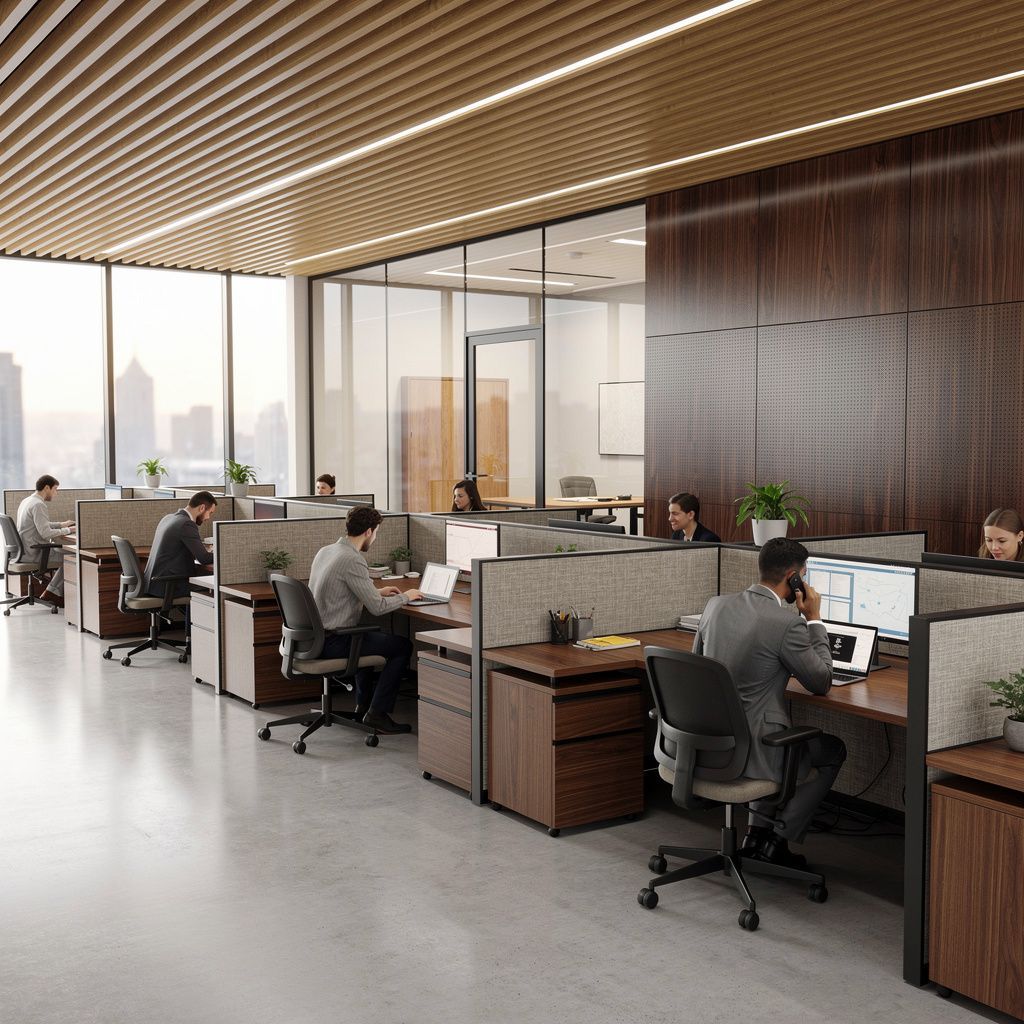
Learn how walls, ceilings, materials, and sound-absorbing furniture work together to reduce reverberation and create a better office environment.
SoniQ logo in blue and gray text on a white background
August 7, 2026
Learn what reverberation time (RT60) is, why it affects speech clarity and office productivity, and how better acoustic design improves workplace performance.
SoniQ logo in dark blue and gray text with a stylized Q.
August 6, 2026
Echoes, reverberation, and office noise can reduce virtual meeting quality. Learn why office acoustics matter and how to improve speech clarity.
August 6, 2026
Office furniture does more than furnish a workspace. Learn how desks, seating, and acoustic furniture influence sound quality, reverberation, and workplace productivity.
SoniQ brand logo featuring blue and gray lettering
August 6, 2026
Ceiling tiles and carpet reduce some office noise but often fail to control reverberation. Learn why modern workplaces require a more complete acoustic solution.

Show More