Why Ceiling Tiles and Carpet Struggle to Help with Office Acoustics
Offices are prone to excess noise. Even those with standard acoustic treatments — such as ceiling tiles and carpet — fail to control the rumblings of an office environment completely. While acoustic treatments are part of the solution, they are not the entire solution for achieving a high-quality workplace. Effective sound management in an office setting requires a layered system of acoustic treatment, diffusion, and soundproofing that goes beyond just ceiling and floor treatments.
What do Acoustic Panels Do in Ceilings and Floors?
You may be familiar with acoustic panels, but may not know what they do. Acoustic panels are designed to enhance a room’s acoustics by absorbing sound waves, reducing echoes and reverberations, and improving overall sound clarity. By combining surface diffusion with porous absorption, sound panels absorb excess sound waves that reflect off the surface. Grooved or slatted surfaces of acoustic panels disrupt sound waves, scatter them in multiple directions, and therefore prevent echoes.
When acoustic panels are mounted on
ceilings and floors, they serve similar functions. Acoustic panels in ceilings manage noise from above by reducing reflections. Both ceiling panels and clouds absorb sound waves that bounce off the hard, reflective ceiling. This can make conversations easier to hear, especially in open floor plan offices. Panels can be mounted directly to drywall, installed in suspended ceiling grids, or hung vertically as baffles.
As for the flooring, acoustic panels are often used as underlayment to help reduce impact noise and minimize sound transfer to other floors. Think of them as a damper between the hard surface, acting as a shield to lower the sound of footsteps, chair movements, and dropped items. Even offices with carpeting will benefit from acoustic panels in the flooring because they specifically target and reduce impact noise.
The Shortcomings of Ceiling Tiles and Carpet in Sound Absorption
Modern acoustic ceiling tiles and carpet offer limited sound control. They can’t always address low-frequency noise and sound transmission between rooms. For offices, this means overhearing conversations from a neighboring conference room or even a closed-door office that’s meant for private meetings. This lack of speech privacy can be a concern, particularly for industries handling sensitive information, such as financial services and health care.
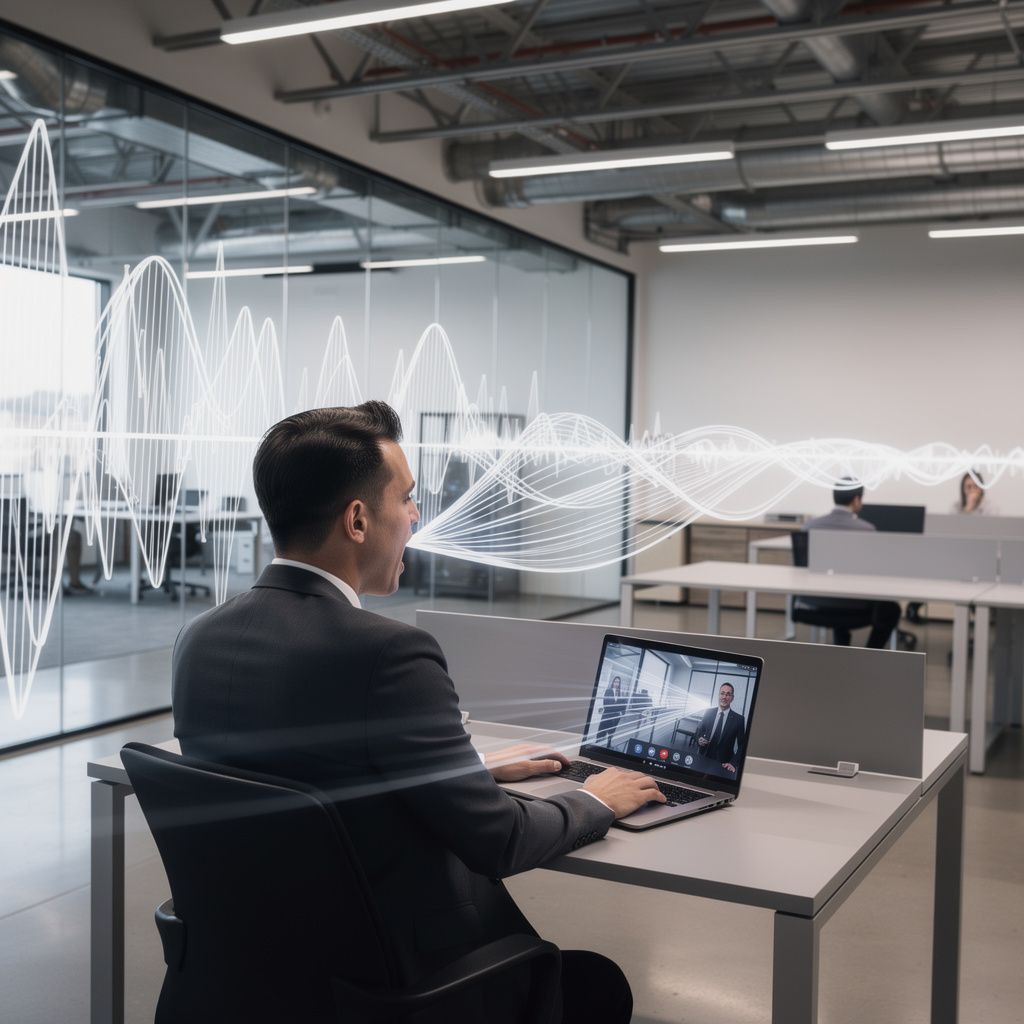
Additionally, sound waves scatter not only vertically, but also horizontally. When acoustic treatments are applied only to the top and bottom of the room, they fail to address speech-level sound. Sound will therefore reflect across the
walls and office
furniture, creating reverberations and echoes.
Ceiling tiles and carpet provide basic absorption; however, they fail to block sound traveling between rooms and are less effective at absorbing background noise, such as the hum from an HVAC system or chatter happening in the entranceway. These noises can quickly become distracting for employees who need a quieter space to be most productive.
Moreover, ceiling tiles have low Noise Reduction Coefficient (NRC) values, making them sometimes ineffective alone at reducing noise in modern, open-plan offices. NRC is a standard measure of how well a material absorbs sound. Materials are rated on a scale of 0.0 to 1.0, with lower numbers indicating they reflect sound and higher numbers indicating they absorb sound. Ceiling tiles range in NRC from 0.70 to 1.00.
Carpet ranges depend on the
pile height and underlay. Standard commercial carpet may be cost-effective, but it won’t always absorb high-frequency sounds. If your office is above the ground floor, noise can also transfer to other floors, disrupting multiple workspaces.
The Role of Acoustic Materials for Walls
Acoustic wall materials absorb sound waves to reduce echoes, reverberation, and noise levels in an office. They can help improve speech intelligibility, ensuring employees aren’t constantly raising their voices to be heard while also increasing acoustic privacy to keep private conversations confidential.
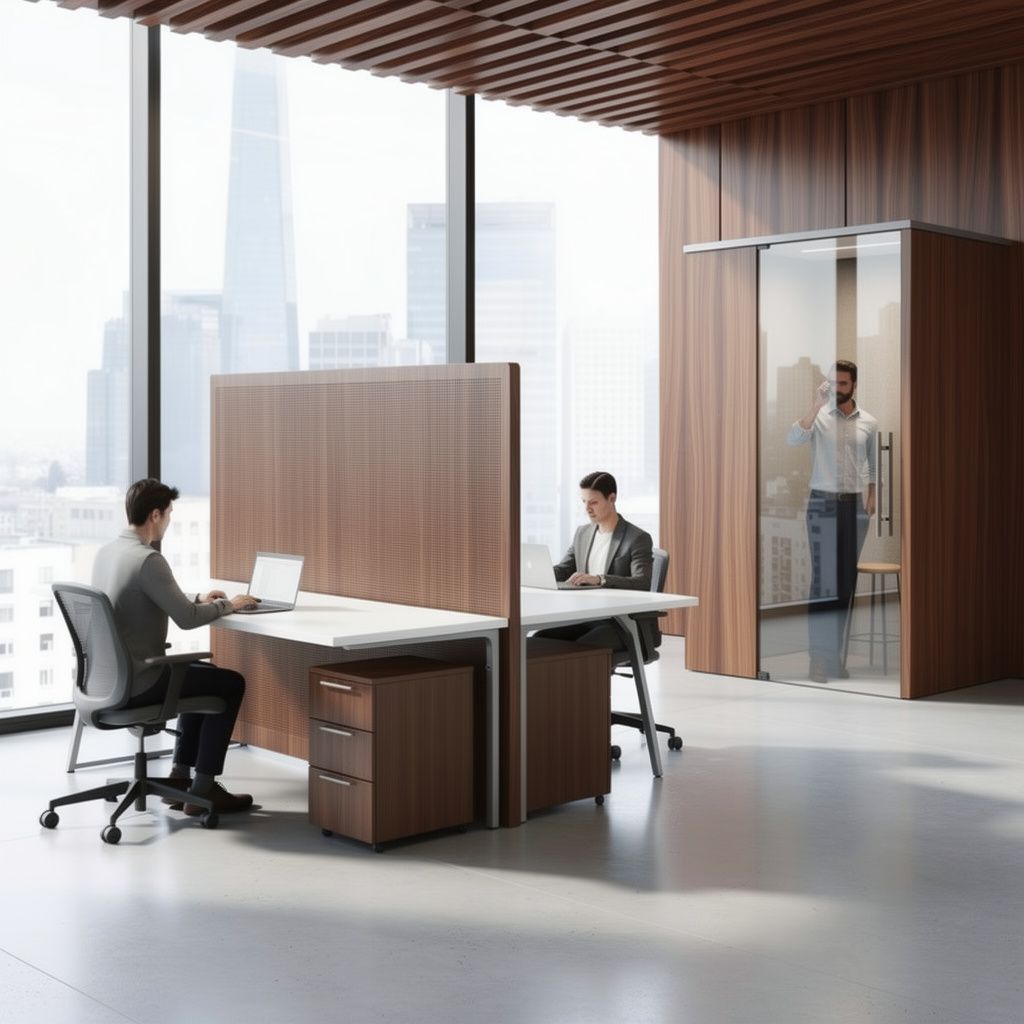
Acoustic wall materials can complement ceiling treatments and carpet by minimizing echo and sound transmission. The result will be a more acoustically balanced office environment. Combining treatments across walls,
ceilings, and floors will minimize sound bouncing off hard, reflective surfaces, leading to a more holistic approach and enhancing sound quality in conference rooms, boardrooms, and different working zones.
Common acoustic wall materials include felt panels, fabric-wrapped panels, and wood panels. Each of these materials has different absorption levels. Working with professional acoustic consultants will help you decide the best combination of materials and
office reverberation solutions for your unique office space, fine-tuning your workplace so all employees can show up and perform their best.
A Holistic Approach to Office Noise
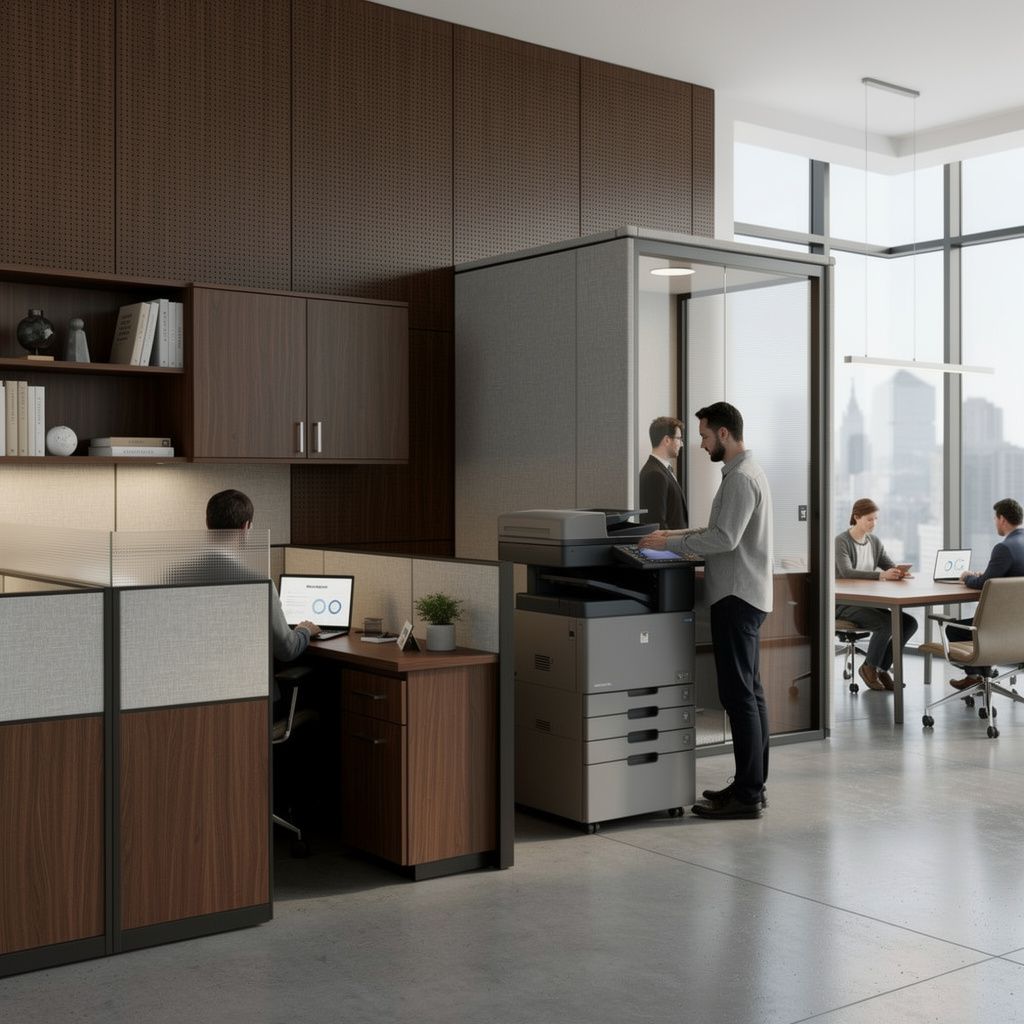
Ceiling tiles and carpet aren’t the only solutions for office acoustics. Acoustic wall panels, partitions and dividers, and specialized furniture with
SoniQ™ Technology can work alongside traditional ceiling treatments and standardized carpet to create a functional office that maximizes
sound absorption, enhances employee well-being, and provides essential privacy without sacrificing the office’s design and aesthetic.
Reach out today to learn more.
Recent Posts